
LOEFFLER’S FORGOTTEN OCTET
UNPUBLISHED, UNRECORDED, UNHEARD SINCE 1897
“Fancy a Paganini who has read Maeterlinck; fancy an imagination fantastic and slightly strained in the path of the morbid; fancy perfect musicianship, a delicate sense of color, values, and a sense of the grotesque; fancy all these things and you have not yet grasped the half of Loeffler's music.”
—Philip Hale, Musical Courier, February 23, 1898
In April 2020, Graeme Steele Johnson discovered the unpublished manuscript to a forgotten, 125-year-old work by the Berlin-born, Boston-based composer Charles Martin Loeffler (1861-1935) in the archives of the Library of Congress. Unpublished, unrecorded and unheard since 1897, the piece is scored for an octet of two clarinets, harp, string quartet and double bass, and was premiered at Boston's Association Hall by the Kneisel Quartet and members of the Boston Symphony Orchestra. One reviewer present "[could] hardly say enough" about the Octet, writing that "the work took nearly everyone by storm." A second performance took place the following month, in March of 1897, at the home of Isabella Stewart Gardner. Incredibly, the piece was never heard again.
Hailed in obituaries as the "dean of American composers," Loeffler was one of the most performed American composers at home and abroad during his lifetime. He joined the Boston Symphony as assistant concertmaster in 1882—the orchestra's second season, and a time when Boston was the "musical Athens of America." With its Brahmsian opening, Wagnerian Adagio and folksy alla Zingara finale, the collision of styles in Loeffler's Octet embodies the groping for national identity happening in America's nascent musical landscape at the time.
Johnson spent a year reconstructing the Octet's score from the 75-page manuscript, creating the first critical edition of the music and revealing a kaleidoscopic piece whose three movements span a half-hour. By resuscitating the piece for its first performances in living memory and first ever recording, he hopes to spotlight Loeffler’s role in shaping American music at its dawn.

Morgan Library
Gilder Lehrman Hall, 7:30 pm
New York, NY
Schedule
Debussy: Prelude to the Afternoon of a Faun [arr. Graeme Steele Johnson for flute, clarinet, harp, string quartet and double bass]
Sibelius: En Saga [reconstruction of original version for flute, clarinet, string quartet and double bass]
Loeffler: Octet for two clarinets, harp, string quartet and double bass
with Graeme Steele Johnson, Emi Ferguson, David Shifrin, Bridget Kibbey, Stella Chen, Siwoo Kim, Matthew Lipman, Samuel DeCaprio and Sam Suggs

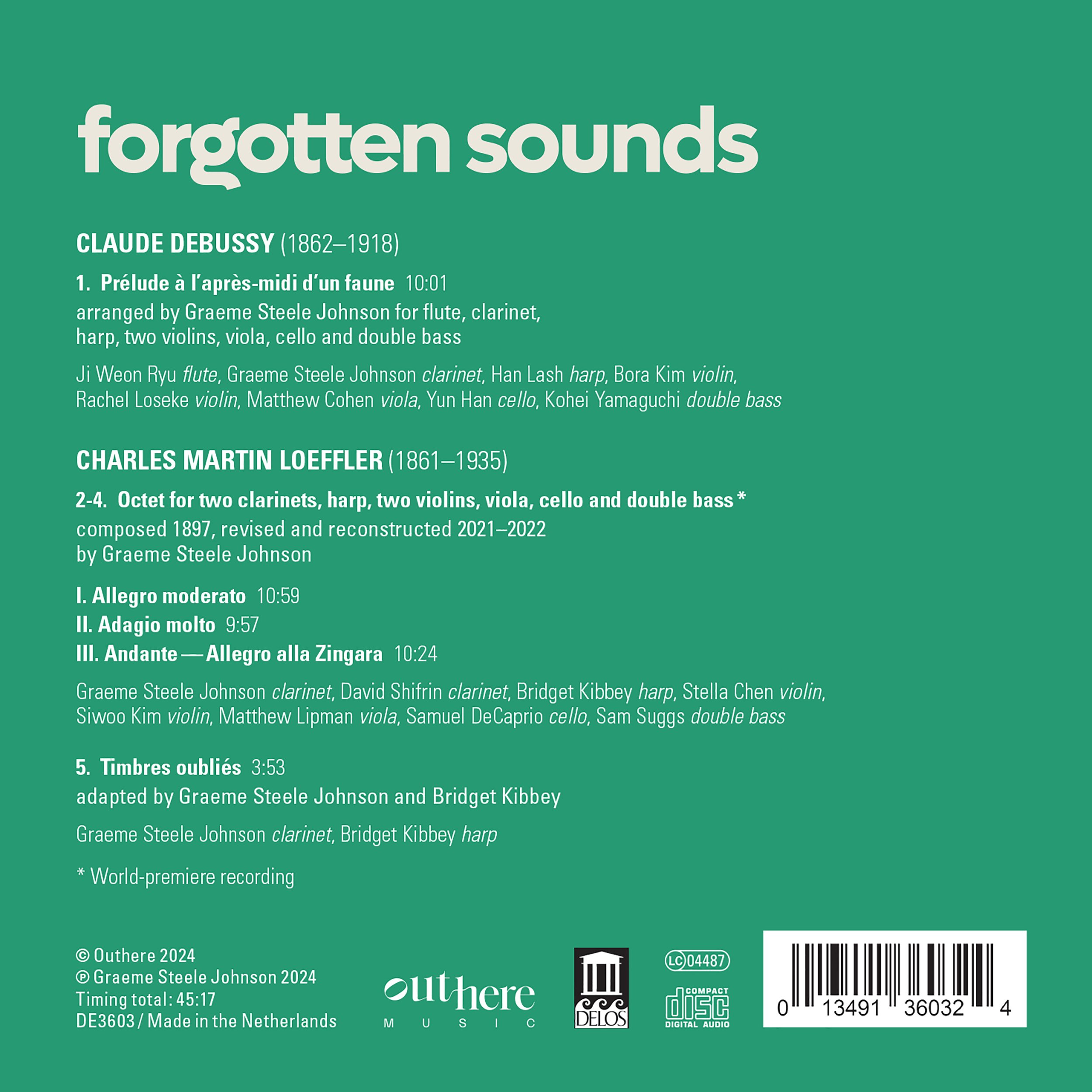
Phoenix Chamber Music Festival
Central United Methodist Church, 7:30 pm
Phoenix, AZ
Loeffler: Octet for two clarinets, harp, string quartet and double bass
Schubert: Octet in F Major for clarinet, bassoon, horn, string quartet and double bass, D. 803
with Graeme Steele Johnson, David Shifrin, Bridget Kibbey, Ida Kavafian, Ani Kavafian, Steven Tenenbom, Peter Wiley, Timothy Cobb, Frank Morelli and William Purvis
March 8, 2024

Library of Congress
Coolidge Auditorium, 8:00 pm
Washington, D.C.
Debussy: Prelude to the Afternoon of a Faun [arr. Graeme Steele Johnson for flute, clarinet, harp, string quartet and double bass]
Loeffler: Octet for two clarinets, harp, string quartet and double bass
Schubert: Octet in F Major for clarinet, bassoon, horn, string quartet and double bass, D. 803
with Graeme Steele Johnson, Emi Ferguson, David Shifrin, Bridget Kibbey, Stella Chen, Siwoo Kim, Matthew Lipman, Samuel DeCaprio, Sam Suggs, Rémy Taghavi and Anni Hochhalter
May 23, 2024

May 22, 2024
The Stissing Center
7:00 pm
Pine Plains, NY
François Couperin/Thomas Adès: Les barricades mystérieuses for clarinet, bass clarinet, viola, cello and double bass
Brahms: Clarinet Quintet in B minor, Op. 115
Loeffler: Octet for two clarinets, harp, string quartet and double bass
with Graeme Steele Johnson, Bixby Kennedy, Charles Overton, Kristin Lee, Siwoo Kim, Matthew Lipman, Audrey Chen and Sam Suggs
December 2024

June 9, 2024
Harvard Musical Association
Boston, MA
Gershwin: Three Preludes [arr. Bixby Kennedy for clarinet, violin, viola, cello and bass]
Brahms: Clarinet Quintet in B minor, Op. 115
Debussy: Danse sacrée et danse profane for harp and string quartet
Loeffler: Octet for two clarinets, harp, string quartet and double bass
with Graeme Steele Johnson, Bixby Kennedy, Bridget Kibbey, Stella Chen, Siwoo Kim, Matthew Lipman, Samuel DeCaprio and Sam Suggs
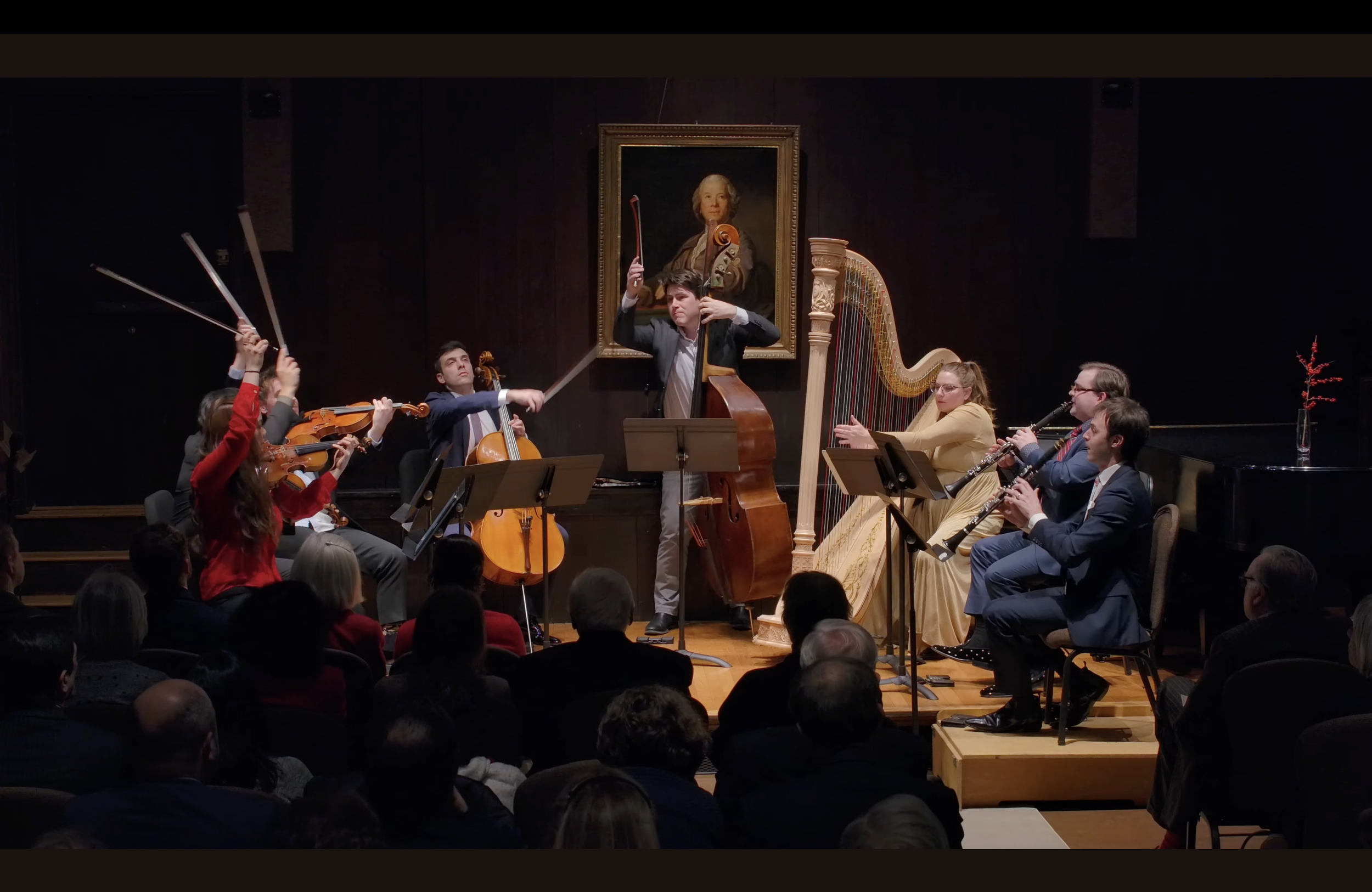
Forgotten Sounds Album Release
The first album to be released under a new partnership between Delos and Outhere Music, Forgotten Sounds features the world-premiere recording of Charles Martin Loeffler’s forgotten Octet and marks the beginning of Graeme Steele Johnson’s exclusive recording relationship with the legendary label. The album also includes Johnson’s popular octet arrangement of Debussy’s Prelude to the Afternoon of a Faun and another little-known piece by Loeffler titled, fittingly, Timbres oubliés (Forgotten Sounds).
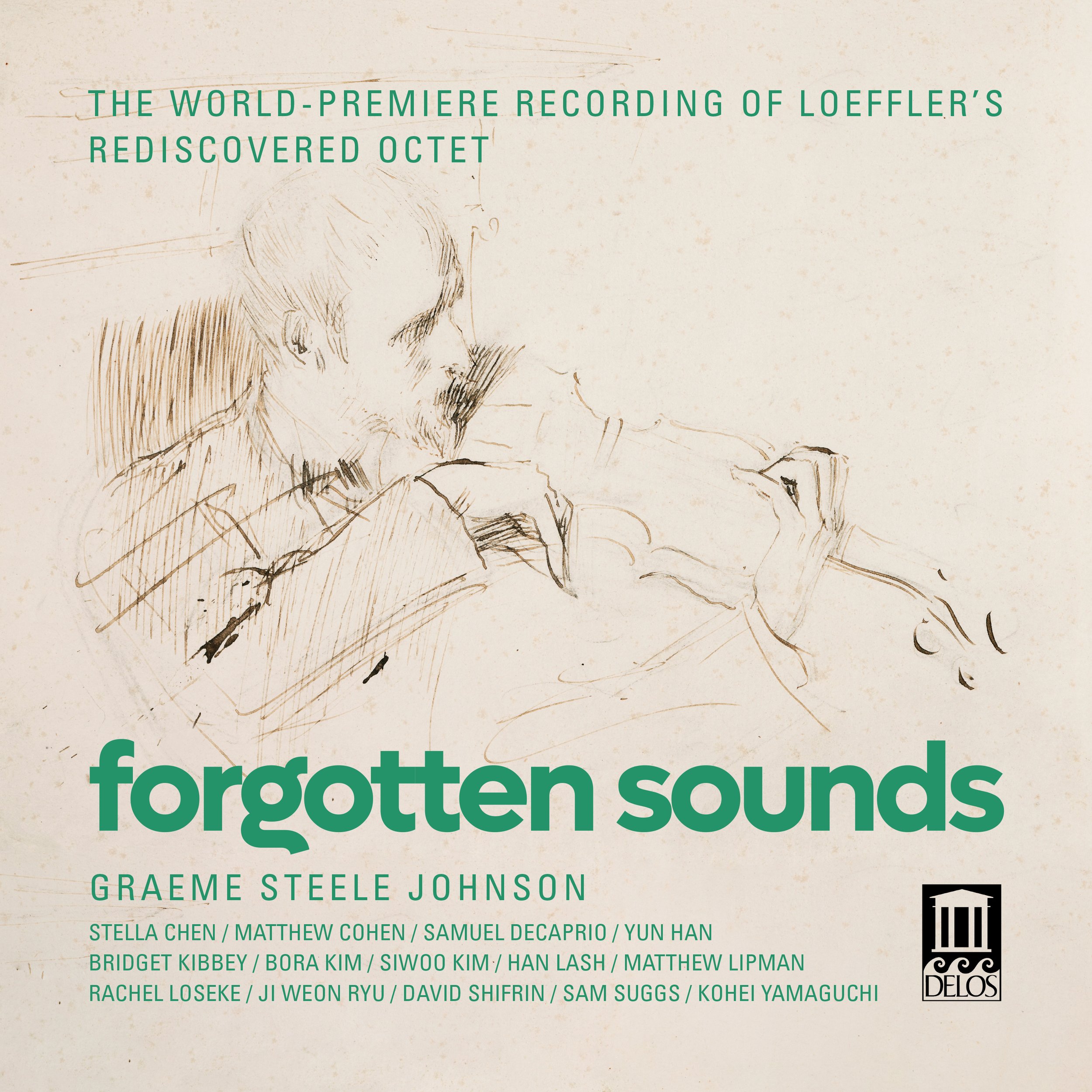
June 7, 2024
April 23, 2025
Ariel Concert Series
St. Louis, MO
Debussy: Prelude to the Afternoon of a Faun [arr. Graeme Steele Johnson for flute, clarinet, harp, string quartet and double bass]
Loeffler: Octet for two clarinets, harp, string quartet and double bass
with Graeme Steele Johnson, Garrett Hudson, Tzuying Huang and musicians of the St. Louis Symphony Orchestra

August 13, 2025
Cooperstown Summer Music Festival
Cooperstown, NY
Poulenc: Sonata for Two Clarinets
Debussy: Prelude to the Afternoon of a Faun [arr. Graeme Steele Johnson for flute, clarinet, harp, string quartet and double bass]
Ravel: Introduction and Allegro
Loeffler: Octet for two clarinets, harp, string quartet and double bass
with Graeme Steele Johnson, Linda Chesis, Bixby Kennedy, KASA Quartet and the Caroga Arts Ensemble
September 30, 2025
Utsey Chamber Music Series
Brooks Center for the Performing Arts, 7:30 pm
Clemson, SC
Gershwin: Three Preludes [arr. Bixby Kennedy for clarinet, violin, viola, cello and bass]
Brahms: Clarinet Quintet in B minor, Op. 115
Martinů: Three Madrigals for violin and viola
Loeffler: Octet for two clarinets, harp, string quartet and double bass
with Graeme Steele Johnson, David Shifrin, Charles Overton, Stella Chen, Siwoo Kim, Matthew Lipman, Samuel DeCaprio and Sam Suggs
October 17, 2025
Emerald City Music
415 On Westlake, 8:00 pm
Seattle, WA
Saint-Saëns: Fantasie for violin and harp, Op. 124
Coleridge-Taylor: Clarinet Quintet in F-sharp minor, Op. 10
Debussy: Danse sacrée et danse profane for harp and string quartet
Loeffler: Octet for two clarinets, harp, string quartet and double bass
with Graeme Steele Johnson, Bridget Kibbey, Kristin Lee, Andy Liang, Katie Liu, Sara Scanlon, Jennifer Godfrey and Angelique Poteat
October 18, 2025
Emerald City Music
Kenneth J. Minnaert Center for the Arts, 7:30 pm
Olympia, WA
Saint-Saëns: Fantasie for violin and harp, Op. 124
Coleridge-Taylor: Clarinet Quintet in F-sharp minor, Op. 10
Debussy: Danse sacrée et danse profane for harp and string quartet
Loeffler: Octet for two clarinets, harp, string quartet and double bass
with Graeme Steele Johnson, Bridget Kibbey, Kristin Lee, Andy Liang, Katie Liu, Sara Scanlon, Jennifer Godfrey and Angelique Poteat
March 28, 2026
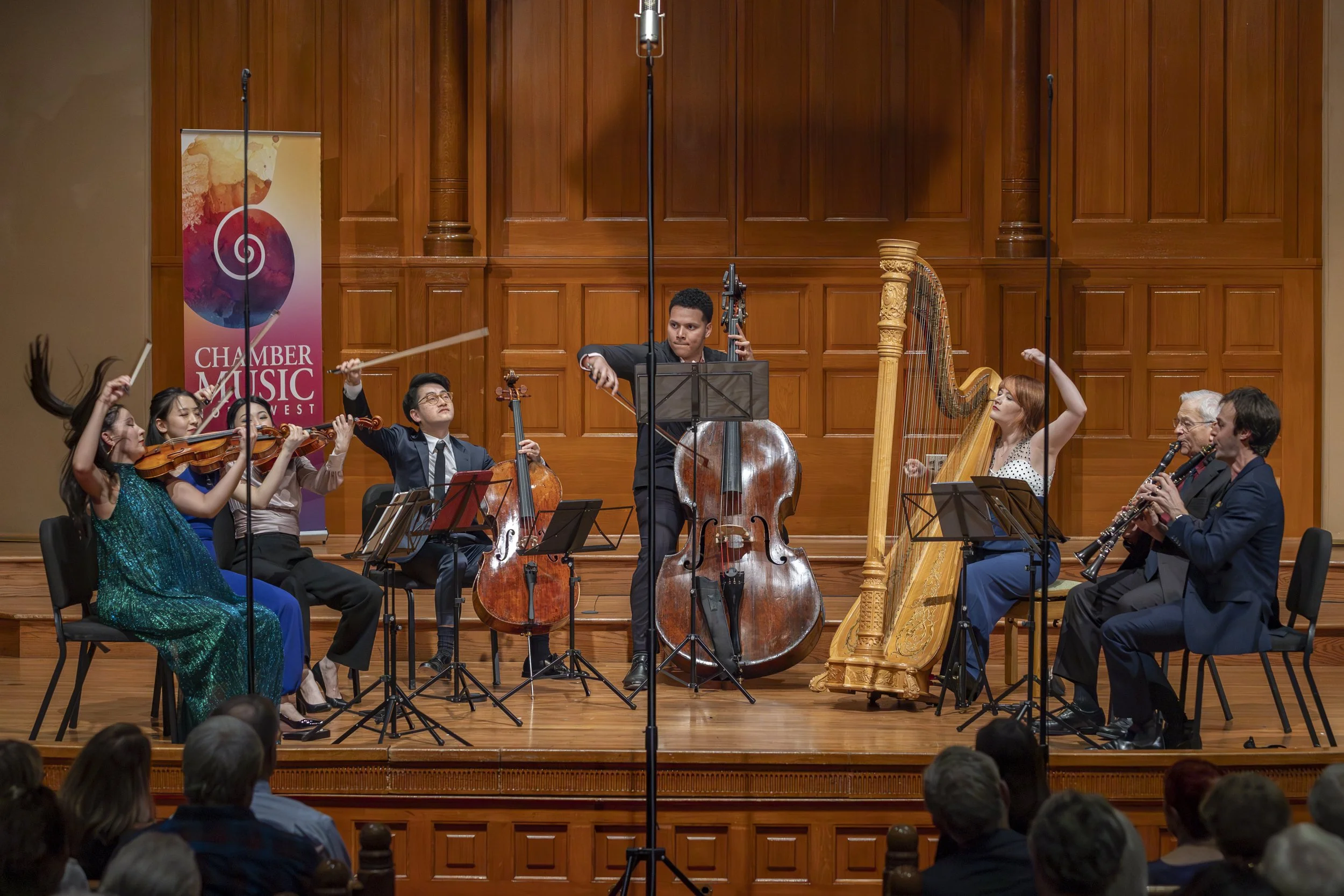
Chamber Music Northwest
First Baptist Church, 7:30 pm
Portland, OR
Schumann: Fantasiestücke, Op. 73 [arr. Reimann for flute, clarinet, harp and two violas]
Debussy: Prelude to the Afternoon of a Faun [arr. Graeme Steele Johnson for flute, clarinet, harp, string quartet and double bass]
Debussy: Première rhapsodie [arr. Todd Palmer for flute, clarinet, harp, string quartet and double bass]
Loeffler: Octet for two clarinets, harp, string quartet and double bass
with Sooyun Kim, Graeme Steele Johnson, David Shifrin, Emily Levin, Isabelle Ai Durrenberger, Anna Lee, Katie Liu, Nathan Chan and Braizahn Jones


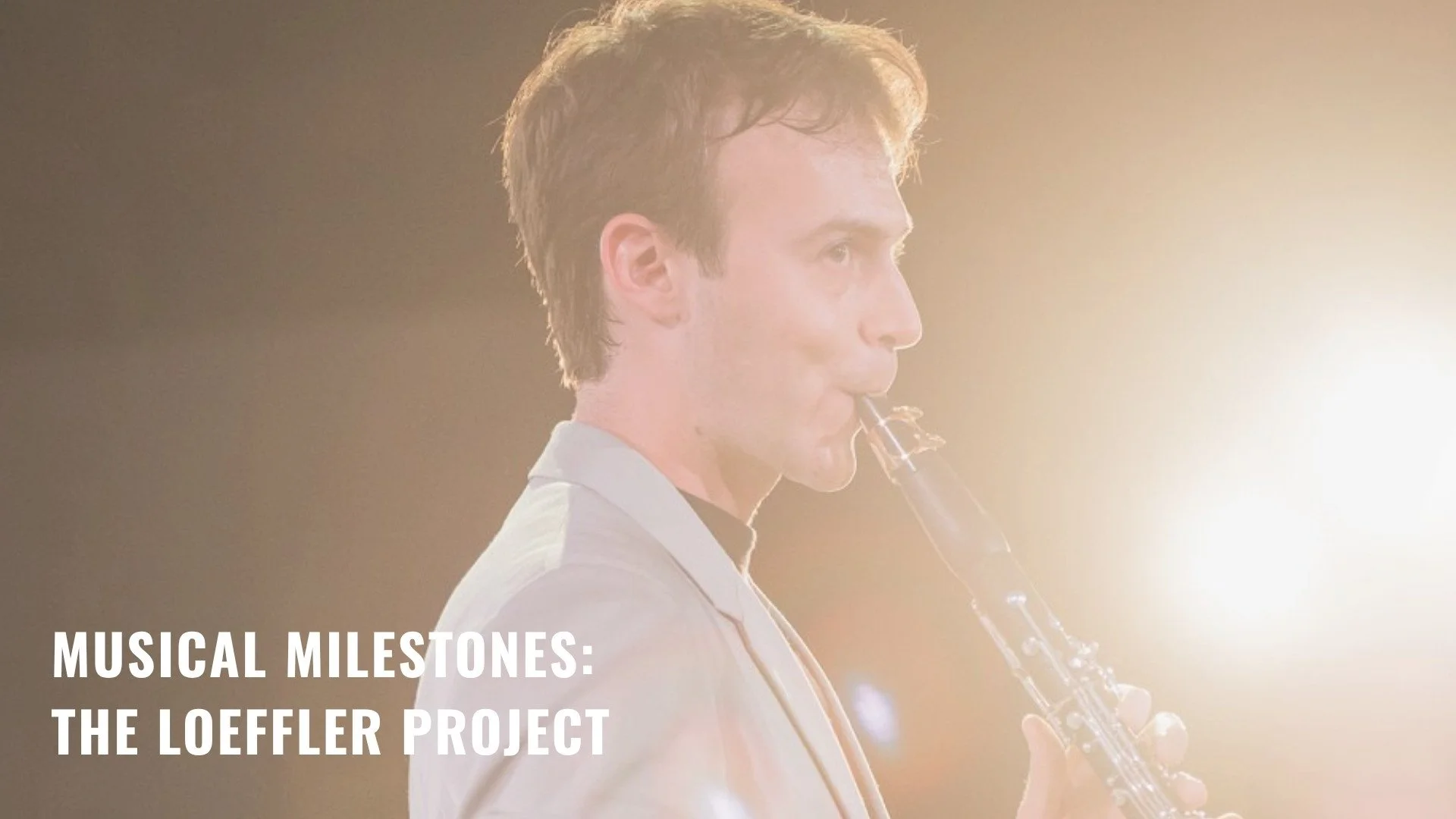
July 30-31, 2026
La Jolla Music Society SummerFest
The Conrad Prebys Performing Arts Center, 7:00 pm
La Jolla, CA
Loeffler: Octet for two clarinets, harp, string quartet and double bass
with Caroga Arts Collective
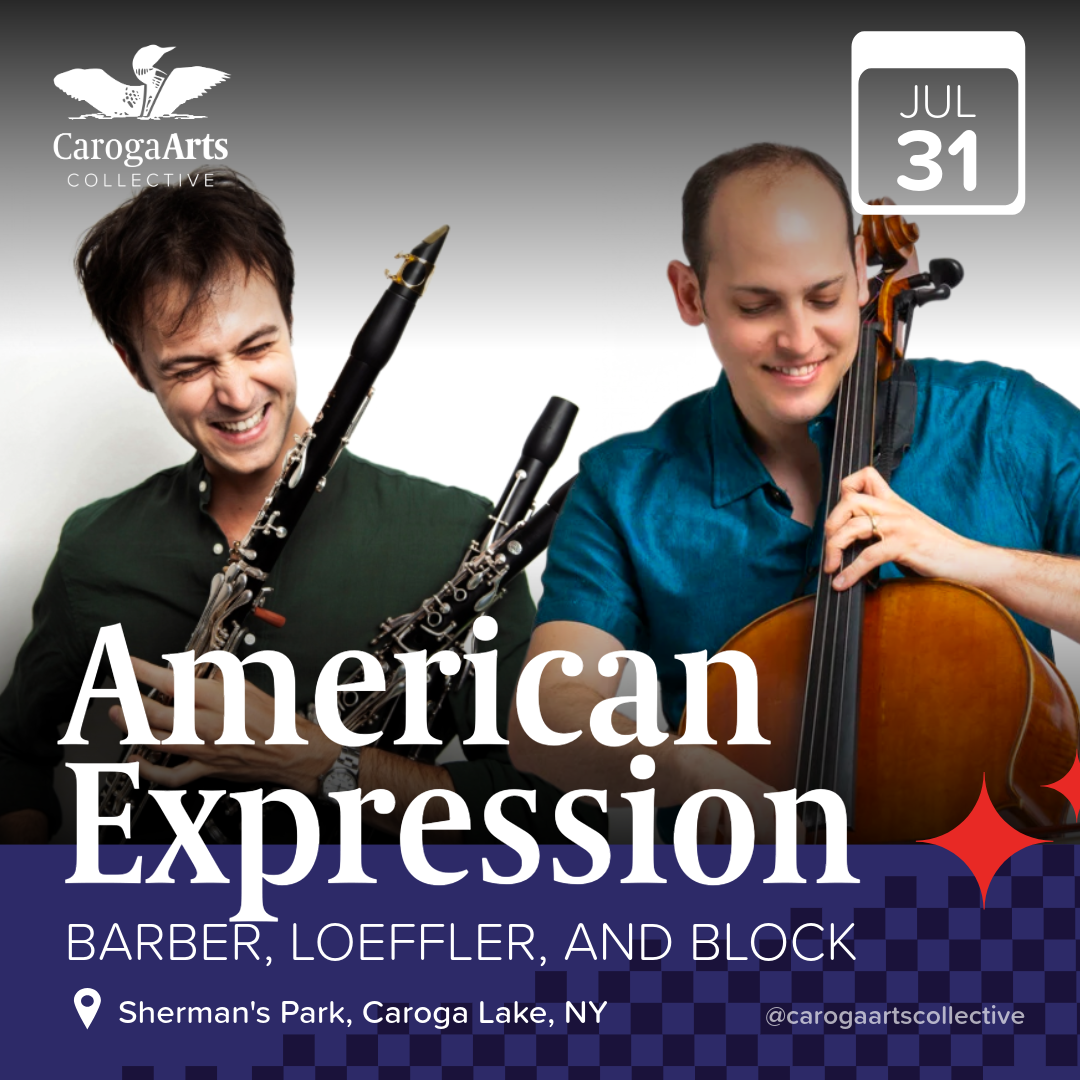
August 9, 2026
Caroga Lake Music Festival
Our Lady of Grace Church & Sherman’s Park, 7:00 pm
Ballston, NY & Caroga Lake, NY
Loeffler: Octet for two clarinets, harp, string quartet and double bass
with Erin Keefe, Andrew Wan, Matthew Lipman, Sterling Elliott, Anthony Manzo, Julie Smith Phillips and Osmo Vänskä
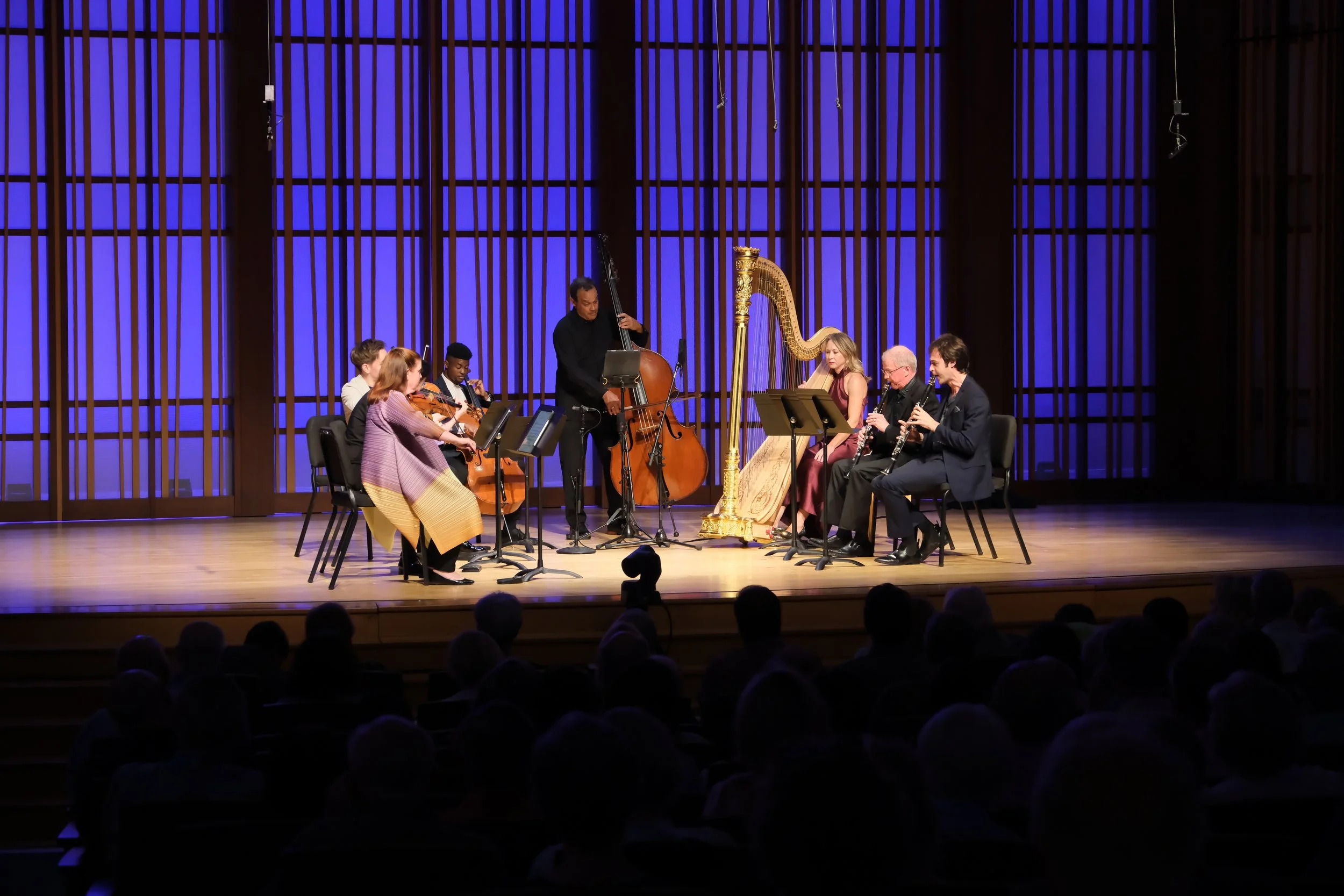
UChicago Presents
Logan Center for the Arts, University of Chicago, 7:30 pm
Chicago, IL
October 9, 2026
Poulenc: Sonata for Two Clarinets
Brahms: Clarinet Quintet in B minor, Op. 115
Loeffler: Octet for two clarinets, harp, string quartet and double bass
with Rachell Ellen Wong, Siwoo Kim, Tanner Menees, Alexander Hersh, Kit Polen, Charles Overton and Zachary Good
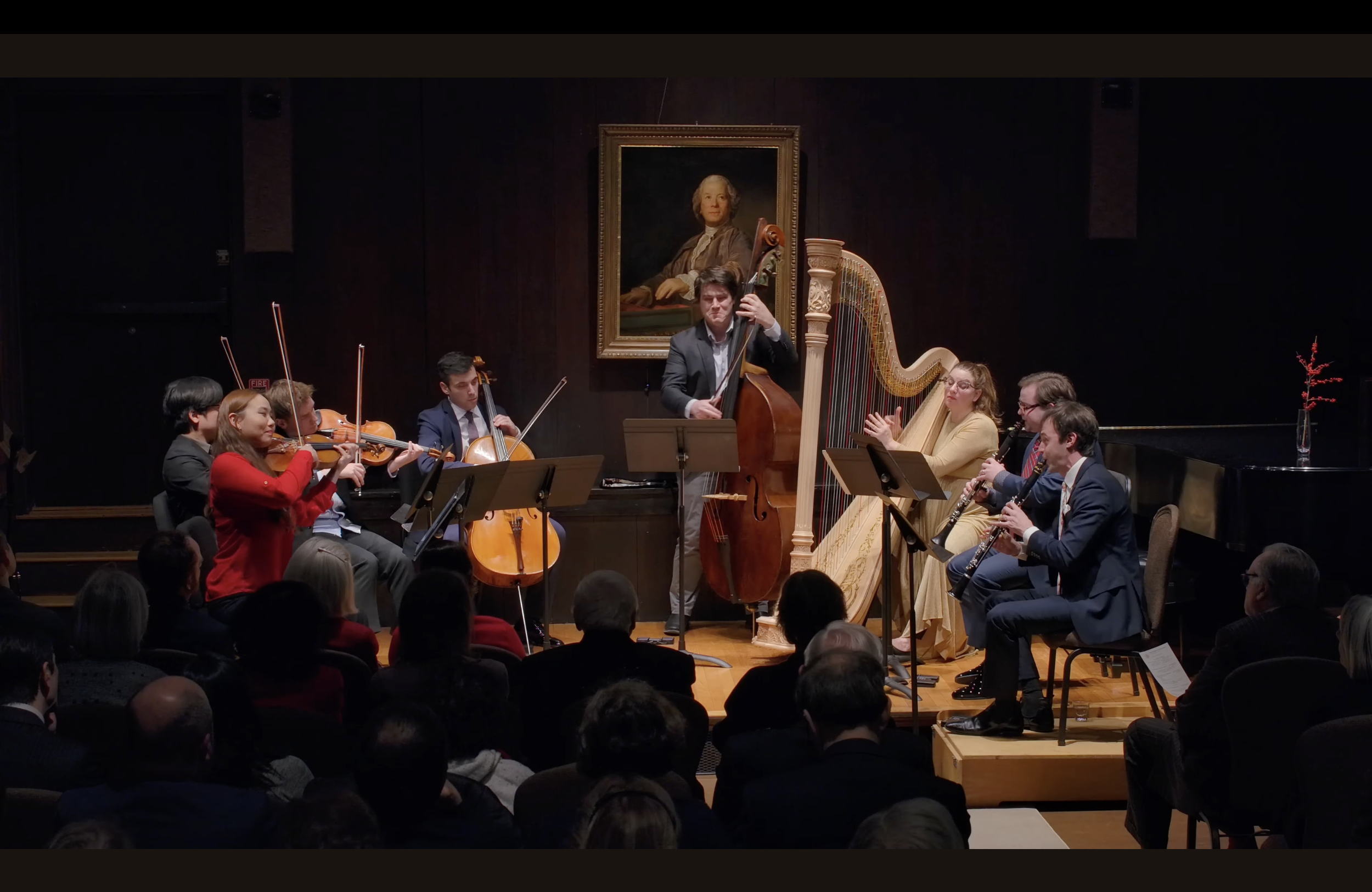
Chamber Music Charleston
St. Matthew’s Lutheran Church, 3:00 pm
Charleston, SC
November 8, 2026
Mozart: Quintet for Basset Clarinet and Strings in A major, K. 581
Loeffler: Octet for two clarinets, harp, string quartet and double bass
with Stella Chen, Francis Hsieh, Ben Weiss, Timothy O’Malley, Zachary Hobin, Charles Messersmith and Eric Sabatino


“First, the piece itself is worthy of Johnson’s labors and an audience’s attention and, though a relatively early entry in Loeffler’s œuvre, it is full of the eclectic influences and original sonic juxtapositions that make him a unique figure; second, the performances are expressive, technically polished and well balanced…we submit that this brainchild of an oddly neglected local composer from one of Boston’s glory eras can and should now find its way in the repertoire. It might even stimulate more such musical archeology…”
“So it says something of Johnson’s recomposition that the score…involves some emphatically satisfying music….Of course, it doesn’t hurt that the Octet gets the royal treatment in the form of an ensemble consisting of clarinetists Johnson and David Shifrin, harpist Bridget Kibbey, violinists Stella Chen and Siwoo Kim, violist Matthew Lipman, cellist Samuel DeCaprio, and bassist Sam Suggs. Their performance is so warm, nuanced, and fluent that it proves impossible to resist.

“[Loeffler’s Octet] survives as a vibrant example of the composer’s polyglot compositional vernacular and wide stylistic palette — the contrapuntal quartet at its core, the ‘smoke and mirrors’ of its twin clarinets, its effortless channeling of symphonic sound and breadth into the crisp articulation of a smallish ensemble.
“At the Library of Congress, the restored octet appears on a program with Johnson’s arrangement of Debussy’s prelude, as well as Franz Schubert’s beloved ‘Octet in F Major (D. 803)’ — another work that was almost lost to obscurity, composed in 1824 but published nearly a half-century after the composer’s death.
“‘It kind of goes with this lost-and-found theme,’ Johnson says. ‘With hope that Loeffler’s octet and all of the other wonderful, deserving music that has somehow slipped through the cracks will follow Schubert into the musical pantheon.’”
The Washington Post

“I’ve been obsessed with this 1897 Octet by Charles Martin Loeffler for months. It’s like a gloriously happy marriage between Brahms’s Clarinet Quintet and Ravel’s Introduction and Allegro. I’m eternally grateful to clarinettist Graeme Steele Johnson, who discovered the manuscript in the Library of Congress and who leads this exquisite performance.”
Editor’s Choice, Best of 2024
“The performance is superb and richly recorded, and I’ve been listening to it obsessively….‘Forgotten Sounds’ goes straight to the top of my ‘Best of 2024’ list.”

Best Classical Albums of 2024 So Far
"We’re fed this idea that time filters for quality, so that music that has survived the test of time must be good music, and, conversely, music that is unknown today must be unknown for good reason. It turns out there are a lot of reasons, many of them not good—systemic, nationalistic, idiosyncratic or even just random—that shape the version of history we’re told. And in this way Loeffler’s seminal role in American music continues today, by helping us paint a more complete picture of musical history so that we can imagine a more colorful musical future."
Graeme Steele Johnson, interview for Blogcritics
Nominee, Gramophone Classical Music Awards
“The work’s mellifluous flow is appealing: imagine Brahms with French trimmings….Johnson’s team, performing with gusto, have definitely revived something worthwhile.”
“The two clarinetists, Johnson and his former teacher—the venerable and amazing David Shifrin—sound as good as it gets, with lovely, dark legato tones that they weave within a layered texture of gorgeous, lush music-making of the highest order.
...Forgotten Sounds is one of the best recordings I have heard and deserves the rave reviews it has received. Johnson and his ensemble have recorded a superb album that all clarinetists will want to have in their listening libraries.”

May 2, 2024


Best 10 Classical Albums of the Month
“Loeffler’s music sounds unbuttoned and quite intoxicated with happiness, straying with urbane carelessness into wayward harmonies and even touches of whole-tone abandon that Brahms would have shunned. Johnson and his colleagues play the Octet with fluency and conviction, memorably conveying the hedonistic delight of its ‘Adagio molto’ second movement.”


June 12, 2024
“This was, simply, one of the best readings of the Brahms [Clarinet Quintet] that we have heard in live performance, technically and interpretively impeccable and passionately communicative. Nuff said.
“It’s [Loeffler’s Octet] an immensely satisfying work in its entirety….The reading seemed immediate, perky, effusive and sonically balanced…It was apparent from the performers’ faces that they were as sure as the audience was that they had killed it (in the good sense).”

“In rescuing Charles Martin Loeffler's Octet from oblivion and giving the work its world-premiere recording, Johnson has not only done a valuable service to the Berlin-born, Boston-based Loeffler (1861-1935) but to classical listeners everywhere….He's to be commended for the tireless work he put into exhuming Octet and for presenting it to the public in a fresh new arrangement. Thanks to him, this remarkable work's sounds are thankfully forgotten no longer.”


Press
★★★★★, Editor’s Choice
“So, was it worth the effort? Most definitely it was! In three movements, and coming in at around half an hour, it’s a substantial work written for imaginative and original forces with a delicious fin-de-siècle air about it. Lushly perfumed, it deserves to be taken up and repays repeated listening, especially when the performance is as good as it is here.”
★★★★★, Chamber Choice
“Thanks to the patient detective work of clarinettist Graeme Steele Johnson, Loeffler’s marvellous 1897 Octet can finally take its rightful place in the repertoire….Captured in sumptuous sound, it is also sublimely played, the gorgeous entwining of pairs of clarinets and violins at the heart of the Adagio molto meltingly beautiful while the rustic fun of the final movement’s Allegro alla Zingara is delightful.”
Critics’ Choice 2024: our favourite classical recordings of the year
Best Classical Music Albums of 2024
“It’s a heady blend of Impressionist color, Brahmsian lyricism and foamy, shifting textures.”
Artists
-
Praised for his "elegant and rounded sound" (Albany Times Union) and "effortless...unmatched" technique (The Clarinet Online), Graeme Steele Johnson is an artist of uncommon imagination and versatility.
His diverse artistic endeavors range from a TEDx talk comparing Mozart and Seinfeld, to his reconstruction of a forgotten 125-year-old work by Charles Martin Loeffler, to performances of Mozart's Clarinet Concerto in its original form on an elongated clarinet that he commissioned. Johnson’s recent and upcoming performances include appearances at Chamber Music Northwest, Bridgehampton Chamber Music Festival, Ravinia, Phoenix Chamber Music Festival, Emerald City Music, Maverick Concerts, Music Mountain and Yellow Barn, as well as solo recitals at The Kennedy Center and Chicago’s Dame Myra Hess series. He is also a regular performer at the Annapolis Chamber Music Festival, Archipelago Collective Chamber Music Festival and Caroga Lake Music Festival. As a concerto soloist, he has performed twice with the Vienna International Orchestra, as well as with the Springfield Symphony Orchestra, Caroga Arts Ensemble, Vermont Mozart Festival Orchestra and the CME Chamber Orchestra. Since 2022 he has served as the clarinetist of the award-winning quintet WindSync, one of only two American wind quintets with a full-time, international touring schedule. WindSync is represented by MKI Artists.
Driven by his interest in shedding fresh perspective on familiar music, Johnson has authored numerous chamber arrangements of repertoire ranging from Mozart and Debussy to Gershwin and Messiaen, and performed them around the country with such artists as the Miró Quartet, Valerie Coleman and Han Lash. Other distinguished chamber music collaborators include David Shifrin, Lucy Shelton, Ani Kavafian, Anthony Marwood, Allan Vogel, William Purvis, Imani Winds, the Callisto and KASA Quartets, New York New Music Ensemble, Frisson Ensemble, Metropolis Ensemble and American Modern Ensemble. Upcoming performances include collaborations with David Shifrin, Ida and Ani Kavafian, Steven Tenenbom, Peter Wiley and Timothy Cobb.
Johnson is the winner of the Hellam Young Artists’ Competition and the Yamaha Young Performing Artists Competition; other recent accolades include the Saint Botolph Club Foundation's Emerging Artist Award and the inaugural Lee Memorial Scholarship from the Center for Musical Excellence. He has recorded commercially for Hyperion Records, MSR Classics and Musica Solis Productions, as well as a recent recording project at Abbey Road Studios with WindSync.
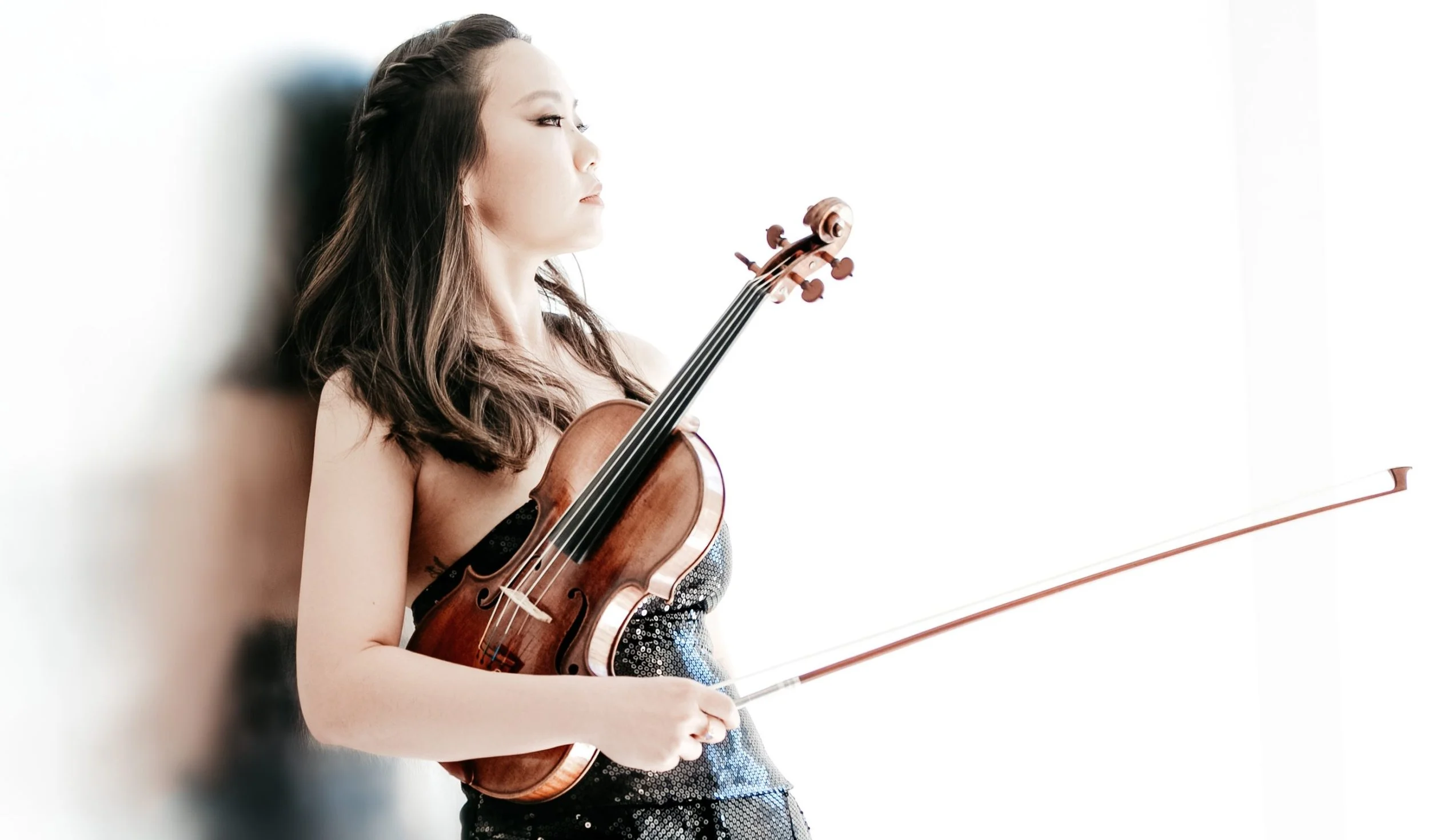
Johnson's writing about music has been published by the international journal The Clarinet, as well as in program booklets by Carnegie Hall, Chamber Music Northwest, Yale and the Norfolk Chamber Music Festival, and as liner notes accompanying albums by David Shifrin, Ricardo Morales, Lloyd Van't Hoff and the Center for Musical Excellence. He holds graduate degrees from the Yale School of Music, where he was twice awarded the school's Alumni Association Prize. His major teachers include David Shifrin, Nathan Williams and Ricardo Morales, and he is now a doctoral candidate at The Graduate Center of the City University of New York under the mentorship of Charles Neidich and Kofi Agawu.
-
Winner of both the Avery Fisher Career Grant (1987) and the Avery Fisher Prize (2000), David Shifrin is in constant demand as an orchestral soloist, recitalist and chamber music collaborator.
Mr. Shifrin has appeared as soloist with the Philadelphia and Minnesota Orchestras and the Dallas, Seattle, Houston, Milwaukee, Detroit, Fort Worth, Hawaii and Phoenix Symphonies, among many others in the United States, as well as with orchestras in Italy, Switzerland, Germany, Japan, Korea, China and Taiwan. As a recitalist he has appeared at such venues as Alice Tully Hall, Carnegie Hall, the 92nd Street Y, and the Library of Congress. A much sought after chamber musician, he has collaborated frequently with such distinguished artists as the Guarneri, Tokyo, Emerson, Orion, Dover and Miró Quartets, as well as Wynton Marsalis, André Watts, Emanuel Ax and André Previn.
An artist member of the Chamber Music Society of Lincoln Center since 1989, Mr. Shifrin served as its Artistic Director from 1992 to 2004. He has toured extensively throughout the United States with CMSLC and hosted and performed in several national television broadcasts on PBS's Live from Lincoln Center. He also served as Artistic Director of Portland's Chamber Music Northwest from 1981 through 2020.
Mr. Shifrin joined the faculty of the Yale School of Music in 1987 and was appointed Artistic Director of the Chamber Music Society of Yale and the Yale in New York series at Carnegie Hall in 2008. He has also served on the faculties of The Juilliard School, University of Southern California, University of Michigan, Cleveland Institute of Music and the University of Hawaii.
Recent accolades include a Solo Recitalists' Fellowship from the National Endowment for the Arts and the 2016 Concert Artists Guild Virtuoso Award. He was given an Honorary Membership by the International Clarinet Association in 2014 in recognition of lifetime achievement, and at the outset of his career he won the top prizes at both the Munich and the Geneva International Competitions. In recent years he received the Distinguished Alumni Awards from the Interlochen Center for the Arts and the Music Academy of the West, and a Cultural Leadership Citation from Yale University. He was recognized with the Richard J. Bogomolny National Service Award at the 2018 Chamber Music America Conference for historic service to the small ensemble music field, and in 2019 he was awarded the Chamber Music Society of Lincoln Center's Award for Extraordinary Service to Chamber Music.
Mr. Shifrin performs on a Backun "Lumière" cocobolo wood clarinet and Légère premium synthetic reeds. He is represented by CM Artists New York.
-
Called the “Yo-Yo Ma of the harp,” by Vogue’s Senior Editor Corey Seymour, Bridget Kibbey is in demand for innovative, virtuosic programming that celebrates the expressive range of the instrument. She is the 2022–23 Artist in Residence at the Schubert Club, an alum of The Bowers Program (formerly CMS Two), an Avery Fisher Career Grant recipient, and a winner of the Premiere Prix at the Journées de les Harpes Competition in Arles, France, among others. Kibbey tours projects and programs of her own conception, including her own adaptations of J. S. Bach’s keyboard concertos alongside the Dover Quartet, as well as duo collaborations with mandolinist Avi Avital and violinist Alexi Kenney. This season she launches an all-French program with the Calidore String Quartet and tours her newest project, Persia to Iberia, showcasing the sounds of the Islamic Golden Era through 19th-century Spain alongside Persian vocalist Mahsa Vahdat and percussionist John Hadfield. She also creates projects with Latin Grammy–winning musicians that explore cultural narratives driving songs and dances from South America, and has toured and recorded with luminaries Placido Domingo, Dawn Upshaw, and Gustavo Santaolalla for Sony Records and Deutsche Grammophon. Kibbey made her NPR Tiny Desk Solo Debut in 2021. Her debut album, Love is Come Again, was named a Top Ten Release by Time Out New York. She appears frequently as soloist and chamber musician at festivals and series—and with orchestras as concerto soloist—across the globe.
-
American violinist Stella Chen garnered worldwide attention with her first-prize win at the 2019 Queen Elizabeth International Violin Competition, followed by the 2020 Avery Fisher Career Grant and 2020 Lincoln Center Emerging Artist Award.
Since then, Stella has appeared across North America, Europe, and Asia in concerto, recital, and chamber music performances. She recently made debuts with the New York Philharmonic, Chicago Symphony, Minnesota Orchestra, Israel Philharmonic, Chamber Orchestra of Europe, Baltimore Symphony, Belgian National Orchestra, and many others and appeared at the Vienna Musikverein and Berlin Philharmonie. In recital, recent appearances include Lincoln Center, Carnegie Hall, the Phillips Collection, Rockport Music Festival, and Nume Festival in Italy. She appears frequently with Chamber Music Society of Lincoln Center both in New York and on tour.
Stella has appeared as a chamber musician in festivals including the Ravinia, Seattle Chamber Music, Perlman Music Program, Music@Menlo, Bridgehampton, Rockport, Kronberg Academy, and Sarasota. Chamber music partners include Itzhak Perlman, James Ehnes, and Matthew Lipman.
She is the inaugural recipient of the Robert Levin Award from Harvard University, where she was inspired by Robert Levin himself. Teachers and mentors have included Donald Weilerstein, Itzhak Perlman, Miriam Fried, and Catherine Cho. She received her doctorate from the Juilliard School where she serves as teaching assistant to her longtime mentor Li Lin.
Stella plays the 1700 ex-Petri Stradivarius, on generous loan from Dr. Ryuji Ueno and Rare Violins In Consortium, Artists and Benefactors Collaborative and the 1708 Huggins Stradivarius courtesy of the Nippon Foundation.
-
Siwoo Kim is an “incisive” and “compelling” (Zachary Woolfe, The New York Times) violinist who plays with “stylistic sensitivity and generous tonal nuance” (John von Rhein, Chicago Tribune). Siwoo performs as soloist and chamber musician, and he is the co-founding artistic director of VIVO Music Festival in his hometown of Columbus, Ohio.
Siwoo gave the world premiere performance of Samuel Adler’s violin concerto which was written for him. He recorded the work on Linn Records to commemorate the composer’s 90th birthday, and the BBC Music Magazine praised his “notable fire & impassioned playing.” Siwoo made his Carnegie Hall concerto debut in Stern Auditorium with the Juilliard Orchestra. He has since performed with orchestras around the world including the Staatsorchester Brandenburgisches Frankfurt, Columbus Symphony, Gangneung Philharmonic, Houston Symphony, Johannesburg Philharmonic, Kwazulu-Natal Philharmonic, Orchestre Royal de Chambre, Seongnam Philharmonic, Springfield Symphony, and Tulsa Symphony in venues such as Walt Disney Concert Hall and Lotte Concert Hall.
As a chamber musician, Siwoo formed the “whip-smart” (Alex Ross, The New Yorker) Quartet Senza Misura, which performed at the Phillips Collection, Alice Tully Hall at Lincoln Center, the Kennedy Center, Seoul Arts Center and more during their three years together. He has had the honor of collaborating with artists such as Dénes Várjon, Itzhak Perlman, Jeremy Denk, Joyce DiDonato, Mitsuko Uchida and members of the Guarneri, Juilliard and Takács Quartets. Siwoo spent numerous summers at the Marlboro Music Festival, and he has been featured internationally as guest artist at the Tivoli Festival in Denmark, the Bergen International Festival in Norway, the Stellenbosch International Chamber Music Festival in South Africa, the Fundación Juan March in Spain and with Ensemble DITTO in South Korea.
Siwoo was named the recipient of the 2012 King Award for Young Artists. He took second place at the 2010 Corpus Christi International Competition for Piano and Strings, where he was also awarded special prizes for the best performance of solo Bach and violin performance. He has also been named top prizewinner in the California, Chengdu, Crescendo, Hellam, Ima Hogg, Juilliard, NFAA youngARTS, Schadt, Sejong, and WAMSO competitions.
Siwoo received his undergraduate and graduate degrees from The Juilliard School where he studied under Robert Mann and Donald Weilerstein with full scholarship. He went on to complete a two-year fellowship with Carnegie Hall’s Ensemble Connect. Prior to college, Siwoo studied under Roland and Almita Vamos at the Music Institute of Chicago.
Siwoo performs on a 1753 “ex-Birgkit” Giovanni Battista Guadagnini violin on generous loan through Rare Violins In Consortium.
-
American violist Matthew Lipman has been praised by the New York Times for his “rich tone and elegant phrasing,” and by the Chicago Tribune for a “splendid technique and musical sensitivity.” Lipman has come to be relied on as one of the leading players of his generation, frequently appearing as both a soloist and chamber music performer.
Lipman will debut with the Chicago Symphony Orchestra at the Ravinia Festival and with the Chamber Orchestra of Europe at the Rheingau Music Festival in the summer of 2021. Highlights of recent seasons include appearances with the Minnesota Orchestra, BBC Philharmonic, Academy of St Martin in the Fields, and the Juilliard Orchestra. Lipman has worked with conductors including Edward Gardner, the late Sir Neville Marriner, Osmo Vänskä, and Nicholas McGegan. Lipman was a featured performer with fellow violist Tabea Zimmermann at Michael Tilson Thomas’s 2019 Viola Visions Festival of the New World Symphony in Miami. His recent debuts include at the Aspen Music Festival, Seoul’s Kumho Art Hall, Wigmore Hall, Chicago’s Orchestra Hall at Symphony Center, the Walt Disney Concert Hall and in recital at Carnegie Hall.
Ascent, his 2019 release by Cedille Records, was celebrated by The Strad as a “most impressive” debut album while Lipman is praised for his “authoritative phrasing and attractive sound.” The album marks the first ever recording of the recently discovered work by Shostakovich, Impromptu for viola and piano and of Clarice Assad’s Metamorfose for viola and piano, which Lipman commissioned for the recording. He has also been featured on the recording of Mozart’s Sinfonia Concertante with violinist Rachel Barton Pine and the Academy of St Martin in the Fields conducted by the late Sir Neville Marriner. The album topped Billboard’s Classical Chart and has received praise by both the press and public.
Named the 2019 Artist-in-Residence for the American Viola Society, Lipman has additionally been featured on WFMT Chicago’s list “30 Under 30” of the world’s top classical musicians, and is a published contributor to The Strad, Strings and BBC Music magazines. He was featured on the second season of PBS’s ‘Now Hear This’ performing Schubert’s ‘Arpeggione’ Sonata with pianist Mishka Rushdie Momen. He performs regularly on tour and at Lincoln Center’s Alice Tully Hall with the Chamber Music Society of Lincoln Center and at music festivals including the Morizburg Festival, St. Petersburg’s White Nights, Music@Menlo, Marlboro, Ravinia, Bridgehampton, Seattle, Saratoga, and Kissinger Sommer festivals. His regular chamber music partners include Tabea Zimmermann, Mitsuko Uchida, Itzhak Perlman, Sir András Schiff, Jeremy Denk, Stella Chen, and Pinchas Zukerman. Dedicated to expanding the repertoire for the viola, Lipman has also performed the premieres of works for viola by composers Helen Grime, Clarice Assad, David Ludwig and the American premiere of Monochromer GartenVI by Malika Kishino.
Lipman is the recipient of a 2015 Avery Fisher Career Grant, a Kovner Fellowship, and the Jack Kent Cooke Award, and is also a major prize winner in the Primrose, Tertis, Washington, Johansen, and Stulberg International Viola Competitions. He studied at The Juilliard School with Heidi Castleman, and was further mentored by Tabea Zimmermann at the Kronberg Academy. As an alum of the Bowers Program, Lipman occupies the Wallach Chair at the Chamber Music Society of Lincoln Center. He performs on a 1700 Matteo Goffriller viola loaned through the generous efforts of the Pine Foundation.
-
Currently a C.V. Starr Doctoral Fellow at The Juilliard School, cellist Samuel DeCaprio is quickly establishing himself as one of today's most creative artists and collaborators. With performances taking place from the jungles of Bali to the meditative depths of an underground New York City crypt to Carnegie Hall’s Weill Recital Hall, he aspires to use his voice to bring the works of composers, both revered and underrepresented, to uplift modern audiences. Winner of the 2018 Aldo Parisot Prize from the Yale School of Music, awarded to "gifted cellists who show promise for concert careers," he hopes to reach and inspire new listeners as an ambassador for classical music. Mr. DeCaprio was a winner of the Wilmington Music Festival’s 2019-2020 Emerging Artist Auditions and is currently on the Center for Musical Excellence Artist roster.
Recent highlights include his Lincoln Center concerto debut presenting the United States premiere of Grażyna Bacewicz’s Cello Concerto No. 2 with the Juilliard Orchestra and conductor David Robertson in Alice Tully Hall, as well as solo and chamber performances in England, New York City, Connecticut, Pennsylvania, and North Carolina. In past seasons, Mr. DeCaprio has given solo performances in major cities across the United States, Canada, and Europe, and has been heard in concerto appearances with the University of Connecticut and Willimantic symphony orchestras performing concerti by Haydn and Shostakovich. Recent highlights include appearances on WQXR Midday Masterpieces, The Juilliard School’s Focus Festival, a sold-out performance of the Brahms and Mozart clarinet quintets on The Crypt Sessions, and a recital tour with pianist Edith Widayani in Southeast Asia.
An extremely passionate chamber musician, Mr. DeCaprio’s festival appearances include Ravinia’s Steans Music Institute, IMS Prussia Cove Open Chamber Music, Kneisel Hall, Lake George, Orford Arts Centre, Meadowmount School of Music, and the National Arts Centre Young Artist Program led by violinist Pinchas Zukerman. His enthusiasm for collaboration has led to the opportunity to perform alongside many chamber music luminaries, including violist Atar Arad, violinists Miranda Cuckson, Mikhail Kopelman, Joseph Lin, and Daniel Phillips, cellist Steven Doane, and pianists Vladimir Feltsman and Barry Snyder.
A champion and performer of the music of our time, he has sought out opportunities to collaborate with living composers on their own chamber music, working with individuals such as Harvard composer-in-residence Chaya Czernowin, as well as notable composers Yu-Hui Chang, Brett Dean, Stephen Gryc, John Musto, and Juri Seo. Interested in a wide range of music, he recorded an album for ECM Records with Cuban-jazz composer and pianist David Virelles. Entitled “Gnosis,” the album explores and represents the meeting of worlds — the old and new, Latin and North American, and “is guided by Afro-Cuban folklore and a respect for the recondite” (New York Times). Other recent creative collaborative projects include a soon-to-be-released recording of Steve Reich’s Double Sextet, and a music video of Mozart’s Clarinet Quintet for The Crypt Sessions series. Mr. DeCaprio is also the founder and creator of the recently formed Project Mx2 — a multifaceted project involving commissioning and performing new works for the cello, as well as promoting underrepresented works from the 20th and 21st centuries.
Mr. DeCaprio holds degrees from the University of Connecticut (Bachelor of Music, summa cum laude), Eastman School of Music (Master of Music), Mannes School of Music (Professional Studies Diploma), and Yale School of Music (Master of Musical Arts). While at the Eastman School, he was also awarded the prestigious Performer’s Certificate. Mr. DeCaprio performs on a 1714 Claude Pierray cello on generous loan from The Juilliard School.
-
Through “brilliant and compelling programming” (The Strad), Sam Suggs gathers musical materials through composition, re-composition, and improvisation, melting barriers of genre and style with fresh interpretations and deft transitions between old and new worlds of sound, colored by the unique physicality and haunting resonance of the double bass and guiding audiences through unfamiliar territory with the soft palette of his voice.
Sam is the first solo bassist in 36 years to join the Concert Artists Guild roster, and was recently recognized with an award for Extraordinary Creativity at the 2017 Bradetich Foundation International Double Bass Competition.
A paradigm-shifting bassist-composer, Sam was named ‘New Artist of the Month’ (October 2015) by Musical America after winning 1st place at the 2015 International Society of Bassists Solo Competition while performing many original works.
As a collaborative bassist, he has performed at the Mostly Mozart Festival, Yellow Barn, Chamber Music Northwest, Lincoln Center, Carnegie Hall, the Kennedy Center, and with the Argus Quartet, PUBLIQuartet, Founders, Frisson Ensemble (composer-in-residence), and his contemporary jazz trio Triplepoint.
A native of Buffalo, NY and doctoral candidate at the Yale School of Music, Sam spends his time between the Northeast and the Shenandoah Valley performing with various chamber, crossover, and contemporary groups, giving recitals and masterclasses, and teaching full-time as Assistant Professor of Bass at James Madison University, as well as at the Heifetz Institute, Peabody Bass Works, Sewanee Summer Music Festival, and the Juilliard Summer Strings Program in Shanghai.
Sample Program I
Lost and Found
Two great octets, one beloved and one unknown, entered the repertoire as late bloomers after years of silence, each unpublished during its composer’s lifetime. It’s almost unthinkable that Schubert’s Octet, now a cornerstone of the repertoire, had once slipped into obscurity as a forgotten work when it was finally published in full nearly 50 years after Schubert’s death. The same fate has befallen Loeffler’s Octet, with an even longer gestation period of over 125 years. Together, these works serve as a reminder that our modern sense of the canon is based only on that narrow sliver of music we know today—the music that survived—and a hope that Loeffler’s Octet and the other music that slipped through the cracks will follow Schubert into the musical pantheon.
Charles Martin Loeffler: Octet for two clarinets, harp, string quartet and double bass (1897)
I. Allegro moderato
II. Adagio molto
III. Andante--Allegro alla Zingara
--intermission--
Franz Schubert: Octet in F Major for clarinet, bassoon, horn, string quartet and double bass, D. 803 (1824)
I. Adagio--Allegro--Più allegro
II. Adagio
III. Allegro vivace--Trio--Allegro vivace
IV. Andante--variations. Un poco più mosso--Più lento
V. Menuetto: Allegretto
VI. Andante molto--Allegro--Andante molto--Allegro molto
Sample Program II
From the Ashes: Re-/Deconstruction
Broadly speaking, the classical music field accepts two main categories of music: new music and old music. Programming today is a messy business, freighted by dueling pressures to reject the past and champion music of the moment, or to risk the cobwebs of museum culture by insisting on the canonical tradition. This program resists the binary of old versus new music by inviting musical dialogues across centuries—artists of our time reaching into the past to make music with those who came before us—and culminating in the “new old music” of Loeffler’s forgotten Octet. The program explores three different modes of mining a new repertoire from the ashes of history: distilling Debussy’s orchestral masterpiece into a more intimate interpretation of the Faun; imagining the unseen sketches for a chamber prequel to Sibelius’ orchestral version of En Saga; and resuscitating the forgotten sounds of Loeffler’s Octet after 127 years of silence.
Claude Debussy: Prelude to the Afternoon of a Faun [arr. Graeme Steele Johnson for flute, clarinet, harp, string quartet and double bass] (1894)
Jean Sibelius: En Saga [reconstruction of original version for flute, clarinet, string quartet and double bass] (1892)
--intermission--
Charles Martin Loeffler: Octet for two clarinets, harp, string quartet and double bass (1897)
I. Allegro moderato
II. Adagio molto
III. Andante--Allegro alla Zingara
Sample Program III
The Musical Polyglot
“There is some internal evidence that the Brahms [Clarinet Quintet] may have been in Loeffler’s ears when he wrote the Octet six years later,” one critic wrote after a June 2024 performance, referring to the Hungarian folk idiom of Loeffler’s alla Zingara finale and certain motivic resemblances between the works. The two pieces certainly breathed the same air in Loeffler’s Boston. The same musicians that premiered Loeffler’s Octet also shared the stage for some of the first performances of the Brahms Quintet in America in the years surrounding the Octet. Together, these works offer a sonic snapshot of 1897, the year Brahms died and Loeffler’s Octet was born—and the last time it was heard for the next 127 years. With music by Gershwin, Loeffler’s close friend and mentee, and Debussy, with whom Loeffler shared a teacher, the program contextualizes the swirling influences in Loeffler’s music with works from his American, German and French contemporaries—all key parts of his cosmopolitan identity.
George Gershwin: Three Preludes [arr. Bixby Kennedy for clarinet, violin, viola and cello] (1926)
Johannes Brahms: Clarinet Quintet in B minor, Op. 115 (1891)
I. Allegro
II. Adagio
III. Andantino
IV. Con moto
--intermission--
Claude Debussy: Danse sacrée et danse profane for harp and string quartet (1904)
Charles Martin Loeffler: Octet for two clarinets, harp, string quartet and double bass (1897)
I. Allegro moderato
II. Adagio molto
III. Andante--Allegro alla Zingara
Sample Program IV
First Impressions
Claude Debussy: Prelude to the Afternoon of a Faun [arr. Graeme Steele Johnson for flute, clarinet, harp, string quartet and double bass] (1894)
Maurice Ravel: Introduction and Allegro for flute, clarinet, harp and string quartet (1905)
--intermission--
Debussy: Première Rhapsodie [arr. Todd Palmer for flute, clarinet, harp, string quartet and double bass] (1911)
Charles Martin Loeffler: Octet for two clarinets, harp, string quartet and double bass (1897)
I. Allegro moderato
II. Adagio molto
III. Andante--Allegro alla Zingara
Media

The Loeffler Octet revival project has been supported by CUNY’s Baisley Powell Elebash Dissertation Award, Saint Botolph Club Foundation’s Emerging Artist Award, the inaugural Chang Hoon Lee Memorial Scholarship from the Center for Musical Excellence, and by the generosity of David Hooks and Jan Reynolds.
For booking or to support this project, please contact gsteelej@gmail.com.